Fuel costs are driving inflation up. Is it time to swap to a cheaper-to-run car?
UK inflation hit 3.5% in September, driven by fuel. Here's how to cut your running costs, and when swapping to a hybrid or EV makes sense.
Read more
Clocked up more miles than you expected? Going over the mileage allowance on a PCP agreement does not automatically mean disaster, but it can affect what happens when the agreement ends.
If you return the car, you may face an excess mileage charge. If you decide to keep it or part exchange it instead, the situation can look different.
In this guide, we’ll explain how PCP mileage limits work, what happens if you go over them and what to check before deciding what to do next.
If you exceed the mileage agreed in your PCP contract and return the car at the end of the agreement, you may have to pay an excess mileage charge.
The rate should be set out in your finance agreement and is normally charged per excess mile.
If you buy the car instead of returning it, the contractual mileage charge may not apply in the same way.
If you part exchange the car, higher mileage can still matter because it may reduce the vehicle’s market value and affect how much equity you have.
Mileage is one of the factors used to estimate what a car may be worth at the end of a PCP agreement.
Generally, the more miles a car covers, the more wear it experiences and the lower its resale value may be.
That expected future value helps shape the agreement, including the monthly payments and optional final payment.
This is why you are asked to estimate your expected annual mileage when arranging PCP finance.
Your PCP agreement should state:
For example:
Agreed total mileage: 30,000 miles
Mileage at return: 32,000 miles
Excess mileage: 2,000 miles
Example charge: 10p per mile
Potential excess mileage charge: £200
This is only an example. Charges vary between finance providers, vehicles and agreements, so always check your own contract.
PCP agreements are often described using an annual mileage allowance, such as 8,000, 10,000 or 12,000 miles per year.
However, the agreement may ultimately consider the vehicle’s total mileage across the full term.
For example, a three-year agreement based on 10,000 miles per year might allow around 30,000 miles over the agreement.
The exact wording and calculation method can vary, so check your finance agreement rather than assuming you must hit the same mileage figure every individual year.
If you hand the vehicle back at the end of the PCP agreement, its mileage will normally be checked.
If it exceeds the agreed allowance, your finance provider may apply the excess mileage rate set out in the contract.
For example:
If you are 3,000 miles over and your agreement charges 12p per excess mile:
3,000 x £0.12 = £360
Any mileage charge may also be separate from potential charges relating to the vehicle’s condition or damage.
Internal link: PCP Fair Wear and Tear: What Counts as Damage?
If you make the optional final payment and keep the vehicle, you are not simply returning it to the finance provider.
That means a return-based excess mileage charge will generally not apply in the same way.
However, the extra miles still matter. A higher-mileage car may be worth less when you eventually sell or part exchange it.
So while you may avoid a contractual excess mileage charge by keeping the car, mileage can still affect its real-world market value.
You may still be able to part exchange the car.
In this situation, the key issue is usually the vehicle’s market value rather than simply calculating an excess mileage bill.
Higher mileage can reduce the part-exchange value.
That matters because your car’s value is compared with your finance settlement figure to work out your equity position.
| Scenario | Car value | Settlement figure | Equity |
|---|---|---|---|
| Lower mileage | £14,000 | £12,500 | £1,500 positive equity |
| Higher mileage | £13,000 | £12,500 | £500 positive equity |
In this example, the extra mileage has not stopped the owner from part exchanging the car, but it has reduced the amount of equity available.
Can I Part Exchange a Car With Outstanding Finance?
No.
Going over your agreed mileage does not mean there is only one option.
Depending on your circumstances, you may be able to:
Which route is suitable depends on your agreement, your car’s value, your finance position and what you want to do next.
If you are already over your allowance, start by checking the numbers.
Look at:
This should give you a clearer idea of your likely position rather than waiting until the end of the agreement and being surprised.
Some finance providers may allow you to change your agreed mileage during the agreement. Others may not.
If a mileage change is available, it could affect your monthly payments or other terms.
If your driving habits have changed significantly, contact your finance provider directly and ask what options are available under your specific agreement.
Some providers may allow mileage amendments in either direction, but this depends entirely on the lender and the agreement.
Do not assume that reducing your expected mileage will automatically lower your payments.
Check directly with your finance provider.
The further over your agreed mileage you expect to be, the more important it becomes to understand the numbers early.
You can estimate a potential charge by using:
Expected excess mileage x your contractual rate per mile
You should then compare this with your other options, including keeping or part exchanging the vehicle.
Extra mileage can also reduce the car’s value, so it is worth checking both the contractual charge and the car’s current market position.
Going over your mileage does not automatically mean changing the car is the better option.
Before making a decision, compare:
The important thing is knowing where you stand before those extra miles continue to build up.
A few simple checks can help you keep on top of your mileage:
Whatever stage you're at with your car, swoppa helps you understand your options and make your next move with more confidence.

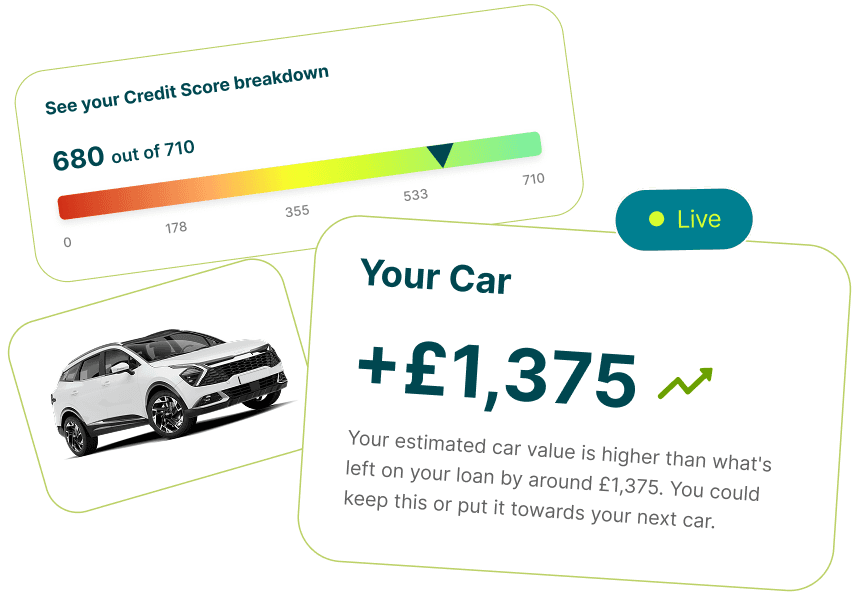
Track what your car’s worth, what you owe, and when it’s the right time to change - all in one simple score.
UK inflation hit 3.5% in September, driven by fuel. Here's how to cut your running costs, and when swapping to a hybrid or EV makes sense.
Read more
Most drivers held off changing car until after the Budget. Here's what it changed for motorists and how to decide whether to move now or wait.
Read more
Waiting on a car finance commission complaint? Here's what selling, settling or swapping your car does — and doesn't — change, plus what paperwork to keep.
Read moreUK inflation hit 3.5% in September, driven by fuel. Here's how to cut your running costs, and when swapping to a hybrid or EV makes sense.
Read moreMost drivers held off changing car until after the Budget. Here's what it changed for motorists and how to decide whether to move now or wait.
Read moreWaiting on a car finance commission complaint? Here's what selling, settling or swapping your car does — and doesn't — change, plus what paperwork to keep.
Read more
TAL Marketing Group Limited trading as swoppa is registered in England and Wales under company number: 10612899. Registered Office Address: Work Life, Brown Street, Manchester, England, M2 1DH.
TAL Marketing Group Limited t/a swoppa is an appointed representative of Creative Finance Corp LTD under reference FRN 968428. Creative Finance Corp LTD is authorised and regulated by the Financial Conduct Authority under reference FRN 702435, and is the principal firm of TAL Marketing Group Limited. We act as a credit broker not a lender. We work with a number of carefully selected credit providers who may be able to offer you finance for your purchase. (Written Quotation available upon request.) Whichever lender we introduce you to, we will typically receive commission from them (either a fixed fee or a fixed percentage of the amount you borrow) and this may or may not affect the total amount repayable. The lender will disclose this information before you enter into an agreement which only occurs with your express consent. The lenders we work with could pay commission at different rates and you will be notified of the amount we are paid before completion. All finance is subject to status and income. Terms and conditions apply. Applicants must be 18 years or over. We are only able to offer finance products from these providers. As we are a credit broker and have a commercial relationship with the lender, the introduction we make is not impartial, but we will make introductions in line with your needs, subject to your circumstances.
TAL Marketing Group Limited t/a swoppa are registered with the Information Commissioner's Office under registration number ZB241343.Your details will be shared with 3rd parties, where it is necessary for our legitimate interests (or those of a third party) and your interests, and your fundamental rights do not override those interests, such as companies that can improve your current financial circumstances