Fuel costs are driving inflation up. Is it time to swap to a cheaper-to-run car?
UK inflation hit 3.5% in September, driven by fuel. Here's how to cut your running costs, and when swapping to a hybrid or EV makes sense.
Read more
Repair bills creeping up. A garage visit that's become a monthly habit. Fuel costs that feel higher every time you fill up. If any of that sounds familiar, you've probably already started wondering whether it's time to change your car.
There's no fixed age or mileage that makes the decision for you. A well maintained car can comfortably clear 150,000 miles, while a neglected one can become a money pit long before that. What matters is the pattern of signs building up around you, and the financial reality once you add them together.
Knowing when to change your car isn't about age or mileage alone. It's about repair costs, reliability, safety and whether the car still fits your life, and taken together those signs tell you something a gut feeling never will.
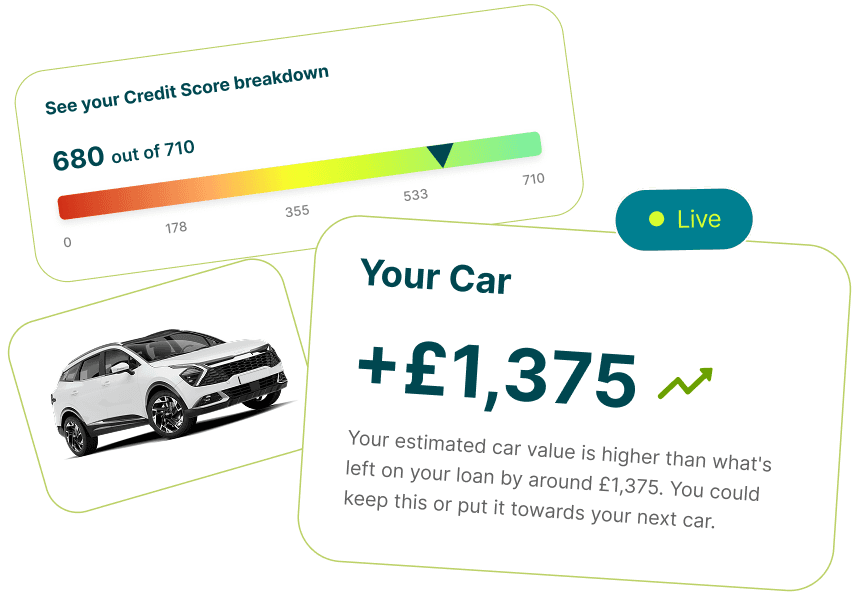
Check your car's value and discover your swoppa Score in minutes.Click here to learn more.
One repair is an inconvenience. A pattern of repairs is a warning sign. If you've been back to the garage several times this year, or you're facing a major repair like a clutch, gearbox, or timing chain replacement, it's worth stepping back and looking at the bigger picture.
A useful rule of thumb here is the 50% rule: if a single repair is going to cost around half of what the car is worth, that money is often better put towards a replacement instead. Weighing up expensive car repairs against the car's actual value is the first real test of whether to repair vs replace a car.
Reliability is worth more than most people give it credit for. A car that won't start on a cold morning, or that leaves you waiting for recovery on the hard shoulder, costs you more than the callout fee. It costs you time, plans, and confidence in the car for longer trips.
If you've stopped trusting your car to get you somewhere important without a hitch, that lack of confidence is itself a sign worth taking seriously.
A car that sails through its MOT year after year is a good sign. A car that scrapes through with a growing list of advisories, or fails outright on corrosion, suspension, or brakes, is telling you something different.
Advisories that repeat or worsen year on year are rarely one-off issues. They're usually early warnings of bigger repairs further down the line.
It's not always one big bill. Sometimes it's the accumulation of smaller ones: fuel economy that's dropped off, insurance premiums going up, road tax bands that no longer suit your budget, more frequent servicing, or tyres wearing faster than they used to.
Add these up over a year and compare the total to what you'd be paying on a newer, more efficient car. The gap is often bigger than expected.
Sometimes a car isn't unreliable or expensive to run, it's just the wrong car for your life now. A new baby, a dog that needs boot space, a longer commute, towing needs, or a switch towards hybrid or EV motoring can all mean your current car simply doesn't fit anymore, regardless of how well it runs.
Safety technology has moved fast. Automatic emergency braking, lane assist, blind spot monitoring, adaptive cruise control, and parking cameras are now standard on many newer cars but weren't fitted as standard even five or six years ago.
If your car is missing features that would genuinely make your daily driving safer, that's a legitimate reason to consider a change, not just a nice-to-have upgrade.
An engine management light that comes back after being cleared, recurring DPF issues, or electrical faults that never quite get fully resolved all point to an underlying problem rather than a one-off fault. When the same warning light becomes a regular visitor, it's usually a sign of a deeper issue that's only going to get more expensive to chase.
Cosmetic corrosion is one thing. Rust that's spreading towards the chassis or structural areas is another. Once corrosion starts affecting the car's structural integrity, it becomes a genuine safety concern, not just something to keep an eye on.
Depreciation is steepest in the first few years and then tends to slow down. Once your car has reached that lower plateau, there's less financial reason to hold onto it if problems start appearing. In some cases, selling before a major repair is due makes more financial sense than paying for the repair and then selling anyway.
Checking how much your car is worth right now gives you a clear, realistic number to work from when deciding whether to sell.
Not every reason to change your car is financial. Comfort, reliability, and modern technology all affect how much you enjoy being behind the wheel. If your current car leaves you feeling stressed rather than at ease, that's a legitimate factor, even if the car is still technically running fine.
Changing your car isn't always the right call. There are plenty of situations where keeping what you've got makes more financial sense:
If most of these apply to you, the smarter move is often to keep driving it rather than take on new finance for a change you don't really need yet.
| Repair Your Car | Replace Your Car |
|---|---|
| Repair is inexpensive | Repairs exceed the car's value |
| Reliable otherwise | Frequent breakdowns |
| Recent MOT pass | Repeated MOT failures |
| Fits your lifestyle | Need more space or a different type of car |
| Running costs reasonable | Fuel and tax costs too high |
Mileage alone doesn't tell you much. 100,000 miles isn't necessarily high mileage anymore, and plenty of modern cars comfortably exceed 150,000 to 200,000 miles when properly maintained.
What matters far more than the number on the odometer is the maintenance history behind it. A high-mileage car with a full service history and regular care is often a safer bet than a low-mileage car that's been neglected. Service history, not mileage, is the number worth checking first.
Run through this checklist before making a decision:
If most of these are pointing towards rising costs and falling reliability, that's a strong signal it's time to change your car. If most are still in your favour, it's likely worth holding on to it a bit longer.
There's no perfect age or mileage that signals it's time to change your car. The right decision depends on repair costs, reliability, safety, and whether the car still genuinely suits your life.
If major repairs are becoming frequent, running costs keep climbing, or the car no longer fits your needs, replacing it is often the better long-term financial decision. If it's still reliable, affordable to run, and fits your lifestyle, there's usually no rush to change it at all.
Check your car's value and discover your swoppa Score in minutes. Click here to learn more.
Whatever stage you're at with your car, swoppa helps you understand your options and make your next move with more confidence.

Track what your car’s worth, what you owe, and when it’s the right time to change - all in one simple score.
UK inflation hit 3.5% in September, driven by fuel. Here's how to cut your running costs, and when swapping to a hybrid or EV makes sense.
Read more
Most drivers held off changing car until after the Budget. Here's what it changed for motorists and how to decide whether to move now or wait.
Read more
Waiting on a car finance commission complaint? Here's what selling, settling or swapping your car does — and doesn't — change, plus what paperwork to keep.
Read moreUK inflation hit 3.5% in September, driven by fuel. Here's how to cut your running costs, and when swapping to a hybrid or EV makes sense.
Read moreMost drivers held off changing car until after the Budget. Here's what it changed for motorists and how to decide whether to move now or wait.
Read moreWaiting on a car finance commission complaint? Here's what selling, settling or swapping your car does — and doesn't — change, plus what paperwork to keep.
Read more
TAL Marketing Group Limited trading as swoppa is registered in England and Wales under company number: 10612899. Registered Office Address: Work Life, Brown Street, Manchester, England, M2 1DH.
TAL Marketing Group Limited t/a swoppa is an appointed representative of Creative Finance Corp LTD under reference FRN 968428. Creative Finance Corp LTD is authorised and regulated by the Financial Conduct Authority under reference FRN 702435, and is the principal firm of TAL Marketing Group Limited. We act as a credit broker not a lender. We work with a number of carefully selected credit providers who may be able to offer you finance for your purchase. (Written Quotation available upon request.) Whichever lender we introduce you to, we will typically receive commission from them (either a fixed fee or a fixed percentage of the amount you borrow) and this may or may not affect the total amount repayable. The lender will disclose this information before you enter into an agreement which only occurs with your express consent. The lenders we work with could pay commission at different rates and you will be notified of the amount we are paid before completion. All finance is subject to status and income. Terms and conditions apply. Applicants must be 18 years or over. We are only able to offer finance products from these providers. As we are a credit broker and have a commercial relationship with the lender, the introduction we make is not impartial, but we will make introductions in line with your needs, subject to your circumstances.
TAL Marketing Group Limited t/a swoppa are registered with the Information Commissioner's Office under registration number ZB241343.Your details will be shared with 3rd parties, where it is necessary for our legitimate interests (or those of a third party) and your interests, and your fundamental rights do not override those interests, such as companies that can improve your current financial circumstances