Waiting for the Budget to change your car? What to weigh up
Most drivers held off changing car until after the Budget. Here's what it changed for motorists and how to decide whether to move now or wait.
Read more
If filling up has felt more painful lately, the official figures back you up. UK inflation rose to 3.5% in September, up from 3.1% in August and the highest rate since October 2025, according to the Office for National Statistics.
The biggest single push came from transport, and motor fuels in particular. Transport prices were 6.6% higher than a year earlier, and average diesel prices hit their highest level since July 2022.
That matters for anyone whose car does a lot of miles on petrol or diesel. When fuel is the thing driving prices up, the car you drive is one of the few levers you can actually pull. So is now the time to swap to something cheaper to run?
Pump prices peaked again in September, with diesel averaging around 199p a litre and petrol around 174p, according to the RAC.
To put that in real money: a petrol car averaging 45mpg over 10,000 miles a year burns roughly 1,010 litres, about £1,760 at today's prices. A diesel doing 55mpg over the same distance costs around £1,640. Every 10p rise per litre adds roughly £80 to £100 a year on top. (Illustrative figures; swap in your own mileage and mpg.)
It's not just fuel either. With inflation above target, the Bank of England is widely expected to raise interest rates at its next meeting on 5 November, which can push up the cost of car finance. [BUDGET DETAIL, if publishing after 28 October: add whether fuel duty is set to rise in January.]
You're not the only one rethinking. Over half of buyers told Carwow that rising fuel prices had made them more likely to consider a hybrid or electric car, and EVs made up a record 40% of new car configurations on its site in September.
| Smaller or newer petrol | Hybrid | |
|---|---|---|
| Best for | Low mileage, mostly short local trips | Mixed driving, no home charger |
| Fuel exposure | Full exposure to pump prices | Reduced, especially in town |
| Watch out for | Still tied to fuel price swings | Savings shrink on long motorway runs |
Public charging costs more than home; pay-per-mile tax planned from April 2028
The right answer depends on how far you drive, where you can charge and how long you'll keep the car. For a full side-by-side, read our guide to petrol, hybrid or electric [internal link].
Switching to a cheaper-to-run car shouldn't mean a long, risky commitment, especially when fuel prices and interest rates are moving this fast.
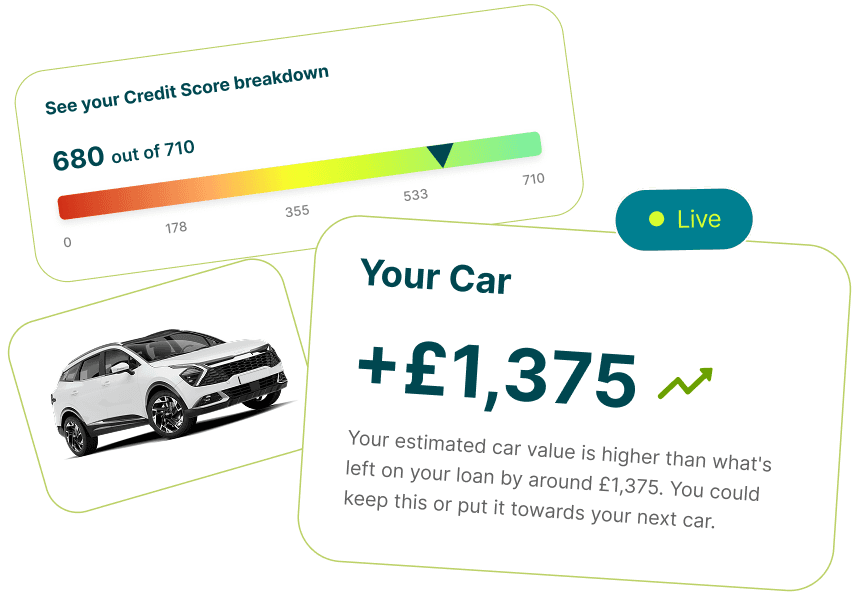
swoppa shows you where you stand with your car and your car finance, so you know whether now is the right time to change. It puts your car’s value, what you still owe and your credit position into one simple number: your swoppa score.
swoppa is free to use. It earns a commission from finance providers and dealers only if you choose to swop through them.

Track what your car’s worth, what you owe, and when it’s the right time to change - all in one simple score.
Most drivers held off changing car until after the Budget. Here's what it changed for motorists and how to decide whether to move now or wait.
Read more
Waiting on a car finance commission complaint? Here's what selling, settling or swapping your car does — and doesn't — change, plus what paperwork to keep.
Read more
Going over your PCP mileage? Learn how excess mileage charges work, what happens if you return, buy or part exchange the car, and what to check next.
Read moreMost drivers held off changing car until after the Budget. Here's what it changed for motorists and how to decide whether to move now or wait.
Read moreWaiting on a car finance commission complaint? Here's what selling, settling or swapping your car does — and doesn't — change, plus what paperwork to keep.
Read moreGoing over your PCP mileage? Learn how excess mileage charges work, what happens if you return, buy or part exchange the car, and what to check next.
Read more
TAL Marketing Group Limited trading as swoppa is registered in England and Wales under company number: 10612899. Registered Office Address: Work Life, Brown Street, Manchester, England, M2 1DH.
TAL Marketing Group Limited t/a swoppa is an appointed representative of Creative Finance Corp LTD under reference FRN 968428. Creative Finance Corp LTD is authorised and regulated by the Financial Conduct Authority under reference FRN 702435, and is the principal firm of TAL Marketing Group Limited. We act as a credit broker not a lender. We work with a number of carefully selected credit providers who may be able to offer you finance for your purchase. (Written Quotation available upon request.) Whichever lender we introduce you to, we will typically receive commission from them (either a fixed fee or a fixed percentage of the amount you borrow) and this may or may not affect the total amount repayable. The lender will disclose this information before you enter into an agreement which only occurs with your express consent. The lenders we work with could pay commission at different rates and you will be notified of the amount we are paid before completion. All finance is subject to status and income. Terms and conditions apply. Applicants must be 18 years or over. We are only able to offer finance products from these providers. As we are a credit broker and have a commercial relationship with the lender, the introduction we make is not impartial, but we will make introductions in line with your needs, subject to your circumstances.
TAL Marketing Group Limited t/a swoppa are registered with the Information Commissioner's Office under registration number ZB241343.Your details will be shared with 3rd parties, where it is necessary for our legitimate interests (or those of a third party) and your interests, and your fundamental rights do not override those interests, such as companies that can improve your current financial circumstances