Fuel costs are driving inflation up. Is it time to swap to a cheaper-to-run car?
UK inflation hit 3.5% in September, driven by fuel. Here's how to cut your running costs, and when swapping to a hybrid or EV makes sense.
Read more
Surprisingly, "How much is my car worth?" gets searched by thousands of UK drivers every month, and for good reason.
Your car's value isn't fixed. It shifts with mileage, condition, demand and the calendar itself, which means the number you had in your head six months ago probably isn't the number today.
Knowing that figure matters before you sell, refinance or upgrade. But a valuation is only half the picture. What you owe on your car matters just as much as what it's worth and the two together tell you something a valuation alone never will.
Check your car's value and discover your swoppa Score in minutes. Click here to learn more.
There isn't one single answer to this question, because your car doesn't have one fixed value. It has several, depending on how you're looking to sell it:
The "right" value depends entirely on which route suits you. A private sale figure isn't wrong if a dealer offers less for a part exchange, they're simply answering different questions.
There are a few reliable ways to get a number, each suited to a different level of detail.
This is the quickest method. Entering your registration pulls through your vehicle's history, specification and mileage automatically, so you're not typing out details you might get wrong. It's the fastest route to a starting estimate, though it still works from averages rather than an inspection of your specific car.
Free tools give you an instant estimate, and plenty now work without asking for an email address upfront. They're useful for a quick answer, but worth treating as a starting point rather than a final figure. Automated valuations can't see a scuff on the bumper or a recent respray, so the number they give is an average for cars like yours, not a judgement on yours specifically.
Sites like Auto Trader, dealer websites and Facebook Marketplace show you what similar cars are actually listed for. It's a useful reality check, but keep in mind the difference between an asking price and a selling price, plenty of listings sit unsold for weeks at their original price before the seller drops it.
A number of factors combine to set your car's value:
Valuation tools build their estimate from market data - recent sales of similar cars, adjusted for depreciation curves, mileage and condition. They factor in optional extras too, since a well-specced car often holds more value than a base model of the same age and mileage. The result is a considered estimate, built from real transactions rather than a guess, though it's still an average rather than a verdict on your exact car.
A part exchange value tends to be lower than what you'd get selling privately. That gap covers the dealer's margin, since they need to prepare and resell your car themselves, along with the convenience of taking it off your hands in one transaction rather than weeks of viewings and messages.
Part exchange makes the most sense when convenience matters more than squeezing out the highest price, particularly if you're going straight into a new car and want the process wrapped up in one visit.
Private sale usually gets you the most money, but it takes the most effort and patience. Here's how the three main routes compare:
| Selling Method | Usually Highest Price | Fastest | Most Convenient |
|---|---|---|---|
| Private Sale | ✅ | ❌ | ❌ |
| Dealer Sale | Moderate | ✅ | ✅ |
| Part Exchange | Lower | ✅ | ✅✅✅ |
There's no universally "best" option here. It comes down to whether you're prioritising the highest price, the fastest turnaround, or the least hassle.
Online valuations are a solid estimate, not a guaranteed offer. They're built from market averages, so they'll get you close, but the actual offer you receive, especially from a dealer, often comes with adjustments once they've inspected your car in person. Condition, tyre wear, interior smell, and small mechanical issues can all shift the number up or down. Treat an online figure as your starting point for negotiation, not the final word.
Because none of the things that shape it stay still. Depreciation runs constantly, mileage climbs every time you drive, and demand shifts with the seasons, convertibles dip in winter, 4x4s rise before it. Fuel prices move buyer preference too, and electric vehicle trends are reshaping which cars hold value best right now. The used car market as a whole moves with supply and demand, so a figure from last quarter can already be out of date.
Yes, and it's worth knowing why some sites ask for it in the first place. Many valuation tools request an email so they can follow up with offers, which is a fair trade for some drivers but not what everyone wants from a quick check. Genuinely free, no-email tools do exist, and they're the better choice if you just want an instant estimate without your inbox filling up afterwards.
Your car's value and your finance position are two separate things, and it's a distinction worth getting clear on. Your car is worth whatever the market says it's worth, regardless of what you owe. What outstanding finance affects is your equity — the difference between that value and your settlement figure.
If your car is worth more than you owe, you're in positive equity. If you owe more than it's worth, you're in negative equity. Neither changes the car's actual value, but both change what you'd walk away with after selling it. For the full breakdown of how this works, see our guide on Car Equity Explained.
A valuation tells you one number. But to actually plan your next move, you need the fuller picture:
Most valuation tools stop the moment they've shown you a price. That's where the useful part of the decision actually begins, not ends.
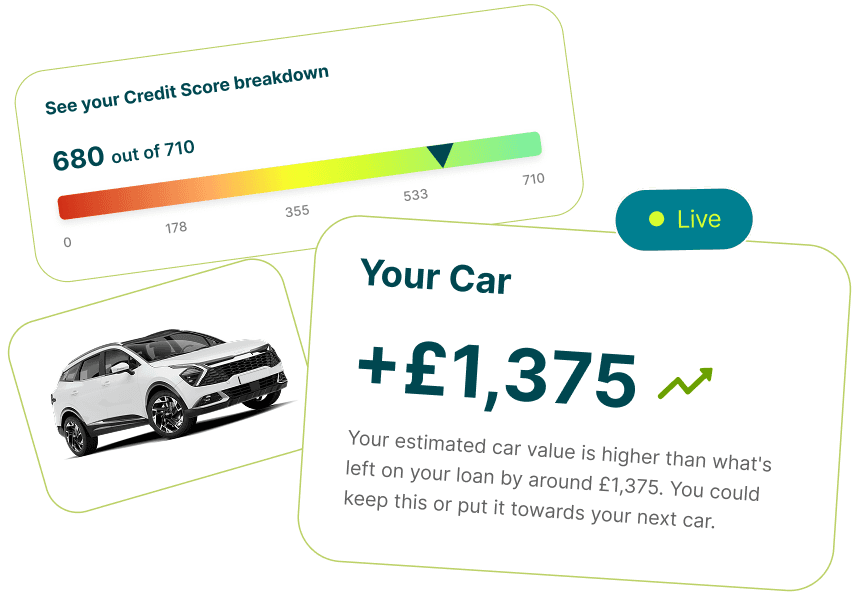
swoppa goes further than a single number. Instead of just showing you a valuation, it brings together:
No pressure, no sales pitch. Just a clear, honest read on where you stand, so your next move is one you're making with confidence, not guesswork.
Check your car's value and discover your swoppa Score in minutes. Click here to learn more.

Track what your car’s worth, what you owe, and when it’s the right time to change - all in one simple score.
UK inflation hit 3.5% in September, driven by fuel. Here's how to cut your running costs, and when swapping to a hybrid or EV makes sense.
Read more
Most drivers held off changing car until after the Budget. Here's what it changed for motorists and how to decide whether to move now or wait.
Read more
Waiting on a car finance commission complaint? Here's what selling, settling or swapping your car does — and doesn't — change, plus what paperwork to keep.
Read moreUK inflation hit 3.5% in September, driven by fuel. Here's how to cut your running costs, and when swapping to a hybrid or EV makes sense.
Read moreMost drivers held off changing car until after the Budget. Here's what it changed for motorists and how to decide whether to move now or wait.
Read moreWaiting on a car finance commission complaint? Here's what selling, settling or swapping your car does — and doesn't — change, plus what paperwork to keep.
Read more
TAL Marketing Group Limited trading as swoppa is registered in England and Wales under company number: 10612899. Registered Office Address: Work Life, Brown Street, Manchester, England, M2 1DH.
TAL Marketing Group Limited t/a swoppa is an appointed representative of Creative Finance Corp LTD under reference FRN 968428. Creative Finance Corp LTD is authorised and regulated by the Financial Conduct Authority under reference FRN 702435, and is the principal firm of TAL Marketing Group Limited. We act as a credit broker not a lender. We work with a number of carefully selected credit providers who may be able to offer you finance for your purchase. (Written Quotation available upon request.) Whichever lender we introduce you to, we will typically receive commission from them (either a fixed fee or a fixed percentage of the amount you borrow) and this may or may not affect the total amount repayable. The lender will disclose this information before you enter into an agreement which only occurs with your express consent. The lenders we work with could pay commission at different rates and you will be notified of the amount we are paid before completion. All finance is subject to status and income. Terms and conditions apply. Applicants must be 18 years or over. We are only able to offer finance products from these providers. As we are a credit broker and have a commercial relationship with the lender, the introduction we make is not impartial, but we will make introductions in line with your needs, subject to your circumstances.
TAL Marketing Group Limited t/a swoppa are registered with the Information Commissioner's Office under registration number ZB241343.Your details will be shared with 3rd parties, where it is necessary for our legitimate interests (or those of a third party) and your interests, and your fundamental rights do not override those interests, such as companies that can improve your current financial circumstances