Fuel costs are driving inflation up. Is it time to swap to a cheaper-to-run car?
UK inflation hit 3.5% in September, driven by fuel. Here's how to cut your running costs, and when swapping to a hybrid or EV makes sense.
Read more
Being declined for car finance stings, especially if you weren't expecting it. But it's far more common than most drivers realise, and it doesn't mean you'll never be approved. Lenders look at a wider picture than just your credit score, which means a decline is often about one specific factor rather than a verdict on your finances overall.
This guide walks through the common reasons applications get turned down, what lenders are actually looking for, what to do next, and how to improve your chances if you're planning to apply again.
Thinking about changing your car? swoppa can help you understand your current finance position before making your next move. Click here to value your car.
There's rarely one single reason. Lenders weigh up several factors together, and any one of these can be enough to tip a decision the wrong way:
Often it's a combination rather than any single red flag, which is why two people with similar credit scores can get different outcomes from the same lender.
Lenders build a picture from several areas, not just your credit report:
Missed payments, defaults or CCJs all count against you, but so can having very little credit history at all. Lenders want to see a track record, and with nothing to assess, some will decline rather than take on the uncertainty.
Even with decent credit, lenders assess whether the repayments are realistic against your income and existing monthly commitments. If your debt-to-income ratio is already stretched, adding a car finance repayment on top may push the application over the lender's threshold.
Every finance application usually triggers a hard search on your credit file. Apply to several lenders in a short space of time, and it can look like financial stress, even if that's not what's actually happening. This alone can be enough to affect a decision.
An easy one to overlook. Lenders use the electoral roll to help verify your identity and confirm where you live. If you're not registered, it can raise a flag even when everything else about your application is solid.
Small mismatches cause more problems than people expect. A wrong income figure, an old address, or employment details that don't line up with what your credit file shows. Lenders can decline simply because the information doesn't check out, not because of anything more serious.
Lenders assess whether the repayments genuinely make sense for your income and expenses. If the vehicle you're applying for pushes past what's considered affordable, that alone can be the reason for a decline, regardless of your credit history.
Being in a probation period, self-employed, on a temporary contract, or having inconsistent income can all make lenders more cautious, since they're looking for evidence of stable, ongoing income to support the agreement.
The decline itself doesn't directly damage your score. What can affect it is the hard search that most applications trigger, which shows up on your credit file regardless of the outcome. One search on its own has a minor impact. Several searches in a short space of time, from multiple applications, is what tends to add up and catch a lender's eye.
Yes. A good credit score isn't a guarantee of approval, since lenders look well beyond it. They're also assessing:
Plenty of drivers with strong credit still get declined, usually because of affordability or existing debt rather than anything showing up as a red flag on their credit file.
Step 1: Find out why. Some lenders will give you a reason. It's worth asking directly, since it tells you what to focus on before applying again.
Step 2: Check your credit report. Look for anything unexpected, including errors that might not actually reflect your real financial position.
Step 3: Correct any errors. If you spot something wrong, most credit reference agencies have a process to dispute and correct it.
Step 4: Improve affordability. Reducing existing debt or increasing your deposit can shift the numbers in your favour.
Step 5: Avoid making multiple applications immediately. Space out any further applications to avoid stacking up hard searches in a short period.
Step 6: Consider saving a larger deposit. A bigger deposit lowers the amount you need to borrow, which can make the whole application more affordable in a lender's eyes.
There's no fixed rule, but giving it a few months rather than reapplying immediately tends to work in your favour. It gives you time to improve your circumstances, whether that's paying down existing debt, correcting any errors on your file, or building up a larger deposit, and it avoids stacking multiple hard searches close together.
Yes, plenty of drivers are approved after an earlier decline. It usually comes down to:
If you're planning to change cars, what's happening with your current vehicle matters too. It could be sitting in:
Understanding this position before applying again can shape which options actually make sense for you.
Rather than pushing you toward another application straight away, swoppa helps you see the full picture first:
Check your vehicle's value and discover whether now is the right time to change your car.
Thinking about changing your car? swoppa can help you understand your current finance position before making your next move. Click here to value your car.
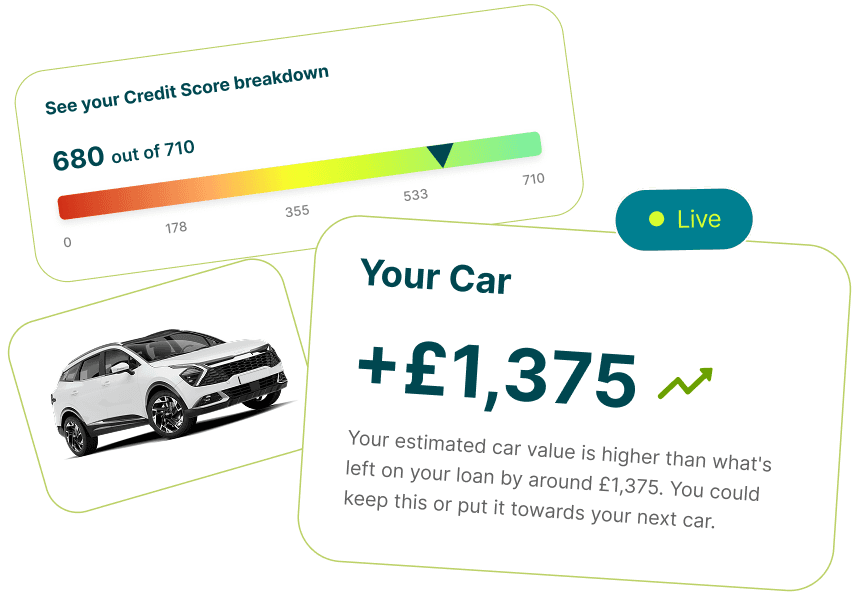
Track what your car’s worth, what you owe, and when it’s the right time to change - all in one simple score.
UK inflation hit 3.5% in September, driven by fuel. Here's how to cut your running costs, and when swapping to a hybrid or EV makes sense.
Read more
Most drivers held off changing car until after the Budget. Here's what it changed for motorists and how to decide whether to move now or wait.
Read more
Waiting on a car finance commission complaint? Here's what selling, settling or swapping your car does — and doesn't — change, plus what paperwork to keep.
Read moreUK inflation hit 3.5% in September, driven by fuel. Here's how to cut your running costs, and when swapping to a hybrid or EV makes sense.
Read moreMost drivers held off changing car until after the Budget. Here's what it changed for motorists and how to decide whether to move now or wait.
Read moreWaiting on a car finance commission complaint? Here's what selling, settling or swapping your car does — and doesn't — change, plus what paperwork to keep.
Read more
TAL Marketing Group Limited trading as swoppa is registered in England and Wales under company number: 10612899. Registered Office Address: Work Life, Brown Street, Manchester, England, M2 1DH.
TAL Marketing Group Limited t/a swoppa is an appointed representative of Creative Finance Corp LTD under reference FRN 968428. Creative Finance Corp LTD is authorised and regulated by the Financial Conduct Authority under reference FRN 702435, and is the principal firm of TAL Marketing Group Limited. We act as a credit broker not a lender. We work with a number of carefully selected credit providers who may be able to offer you finance for your purchase. (Written Quotation available upon request.) Whichever lender we introduce you to, we will typically receive commission from them (either a fixed fee or a fixed percentage of the amount you borrow) and this may or may not affect the total amount repayable. The lender will disclose this information before you enter into an agreement which only occurs with your express consent. The lenders we work with could pay commission at different rates and you will be notified of the amount we are paid before completion. All finance is subject to status and income. Terms and conditions apply. Applicants must be 18 years or over. We are only able to offer finance products from these providers. As we are a credit broker and have a commercial relationship with the lender, the introduction we make is not impartial, but we will make introductions in line with your needs, subject to your circumstances.
TAL Marketing Group Limited t/a swoppa are registered with the Information Commissioner's Office under registration number ZB241343.Your details will be shared with 3rd parties, where it is necessary for our legitimate interests (or those of a third party) and your interests, and your fundamental rights do not override those interests, such as companies that can improve your current financial circumstances