Fuel costs are driving inflation up. Is it time to swap to a cheaper-to-run car?
UK inflation hit 3.5% in September, driven by fuel. Here's how to cut your running costs, and when swapping to a hybrid or EV makes sense.
Read more
Not long ago, most PCP deals ran for two or three years. Now, four-year agreements are the norm.
Former Lookers boss James Brearley estimates that around 65% of advertised PCP offers are close to four years long (Car Dealer Magazine; AM Online). The reason is simple: car prices have risen sharply since the pandemic, and stretching the term keeps the monthly payment affordable (AM Online).
But four years is a long time. It's long enough for a new baby, a new job, a house move, a new commute, a teenager passing their test, or a budget that looks very different from the one you had at the dealership.
Drivers have typically changed car about every two and a half years (Gumtree News). Many are now locked in for much longer, so the chance that your car stops fitting your life before the deal ends is higher than ever.
The motor trade sees longer agreements as a slowdown problem. For you, it's a simpler question: my car doesn't work for me any more, so what can I actually do? That's what this guide covers.
Most people don't change car because they're bored. They change because something in their life moved. These are the most common moments, and what each one usually means for your options.
Whatever the trigger, the mechanics of getting out or changing are the same.
Your car belongs to the finance company until the agreement is paid off. So to sell it or swap it, the finance has to be settled first. In practice, the dealer or buyer usually does this for you, paying your lender directly out of the sale price.
Three numbers decide how it goes.
1. Your settlement figure. This is what your lender needs to close the agreement today. It's usually less than your remaining payments added together, because you save some future interest by settling early. On PCP it includes the balloon payment. Read more: What is a settlement figure?
2. Your car's value. This is what a dealer or buyer will realistically pay today. A part-exchange offer is usually lower than a private sale. Read more: How much is my car worth?
3. The gap between them: your equity.
| Your position | What it means for changing car |
|---|---|
| Positive equity (car worth more than the settlement figure) | Straightforward. The finance is cleared and the leftover money goes towards your next car. |
| Break-even | You can change without paying in or getting anything out. |
| Negative equity (car worth less) | You'll need to cover the gap: pay it, roll it into a new deal if a lender allows, or wait until it closes. |
On a PCP, a big part of what you owe sits in the final balloon payment. So, for much of the agreement, your monthly payments chip away at the balance slowly while the car loses value fastest in its early years.
That's why many PCP drivers are in negative equity for roughly the first half of their deal. Stretch the deal to four years and that "first half" lasts longer. Brearley noted that the old two- and three-year model was designed to protect around 10% equity at the end (Gumtree News). Longer terms trade some of that protection for a lower monthly payment.
None of this means you're stuck. It means you need to know your numbers before you walk into a dealership, not after. Read more: Car equity explained
| Option | Best if… | Watch out for |
|---|---|---|
| Part-exchange for a car that fits | You're in positive equity or near break-even | Dealer offers can be low, so compare valuations first. |
| Sell privately and settle | You want the best price for your car | You must settle the finance before ownership transfers |
| Swap to a cheaper car | Payments are the problem | A small negative equity gap may still need covering |
| Pay the gap yourself | You've paid half the total amount payable and want out | It's cash out today, but you start the next deal clean |
| Roll negative equity into a new deal | You've paid half the total amount payable and want out | You'll borrow more, pay interest on the old shortfall, and likely start the next deal in deeper negative equity |
| Voluntary termination | You've paid half the total amount payable and want out | Condition and mileage charges can apply, and some lenders note it. Check first. |
| Talk to your lender | You're struggling with payments | Lenders must treat customers in financial difficulty fairly. Ask what support they offer. Free help: MoneyHelper |
| Wait and track | You're in negative equity and the car still just about works | Costs nothing. The gap usually narrows each month |
Changing car the moment life shifts isn't always the best call. Waiting a few months can make sense when:
And changing sooner makes sense when:
Ultimately, the decision comes down to you and you alone. No spreadsheet can make a decision or understand your circumstances like you can, but knowing your numbers and your options is always beneficial.
You can't predict what the next four years will bring, but you can know exactly where you stand when they do with swoppa.
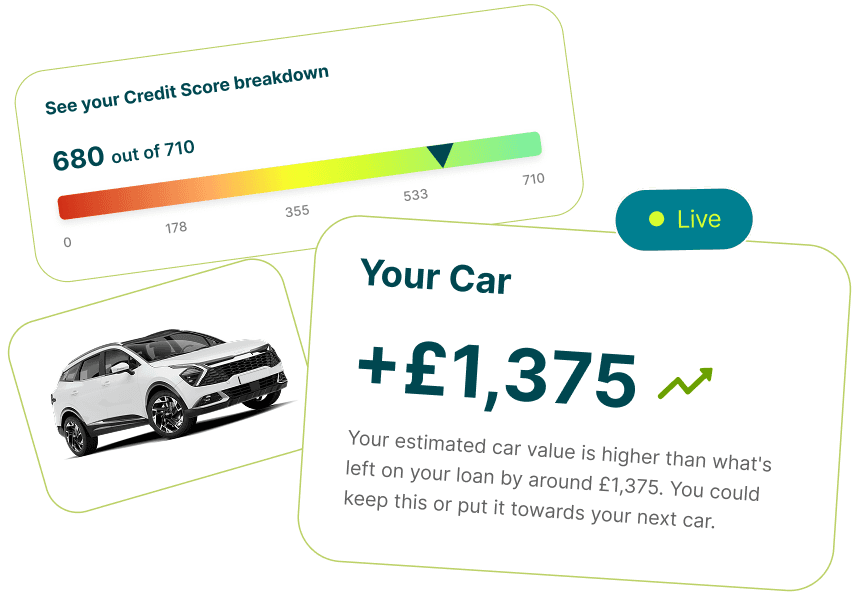
Track your car's value and what you still owe, discover whether you're in positive or negative equity, and get a swoppa Score that tells you whether now is a good time to change or whether waiting will help. When life shifts, you're not starting from a guess.
It's free, and checking won't affect your credit score.
Read more: What is the swoppa Score?
Life changed? See if your car finance can change with it. Check my car's position →

Track what your car’s worth, what you owe, and when it’s the right time to change - all in one simple score.
UK inflation hit 3.5% in September, driven by fuel. Here's how to cut your running costs, and when swapping to a hybrid or EV makes sense.
Read more
Most drivers held off changing car until after the Budget. Here's what it changed for motorists and how to decide whether to move now or wait.
Read more
Going over your PCP mileage? Learn how excess mileage charges work, what happens if you return, buy or part exchange the car, and what to check next.
Read moreUK inflation hit 3.5% in September, driven by fuel. Here's how to cut your running costs, and when swapping to a hybrid or EV makes sense.
Read moreMost drivers held off changing car until after the Budget. Here's what it changed for motorists and how to decide whether to move now or wait.
Read moreGoing over your PCP mileage? Learn how excess mileage charges work, what happens if you return, buy or part exchange the car, and what to check next.
Read more
TAL Marketing Group Limited trading as swoppa is registered in England and Wales under company number: 10612899. Registered Office Address: Work Life, Brown Street, Manchester, England, M2 1DH.
TAL Marketing Group Limited t/a swoppa is an appointed representative of Creative Finance Corp LTD under reference FRN 968428. Creative Finance Corp LTD is authorised and regulated by the Financial Conduct Authority under reference FRN 702435, and is the principal firm of TAL Marketing Group Limited. We act as a credit broker not a lender. We work with a number of carefully selected credit providers who may be able to offer you finance for your purchase. (Written Quotation available upon request.) Whichever lender we introduce you to, we will typically receive commission from them (either a fixed fee or a fixed percentage of the amount you borrow) and this may or may not affect the total amount repayable. The lender will disclose this information before you enter into an agreement which only occurs with your express consent. The lenders we work with could pay commission at different rates and you will be notified of the amount we are paid before completion. All finance is subject to status and income. Terms and conditions apply. Applicants must be 18 years or over. We are only able to offer finance products from these providers. As we are a credit broker and have a commercial relationship with the lender, the introduction we make is not impartial, but we will make introductions in line with your needs, subject to your circumstances.
TAL Marketing Group Limited t/a swoppa are registered with the Information Commissioner's Office under registration number ZB241343.Your details will be shared with 3rd parties, where it is necessary for our legitimate interests (or those of a third party) and your interests, and your fundamental rights do not override those interests, such as companies that can improve your current financial circumstances