- If you've been weighing up a swap to an electric car, the past fortnight hasn't made the decision any easier. The government is reportedly about to cut its 2030 target for electric car sales, and one charging company has warned that public charging could cost more than £1 per kWh next year.
Neither story means EVs are suddenly a bad idea. But they do change who an EV makes sense for, and when. Here's what's going on and how to work out where you stand.
What's happening with the ZEV mandate?
The zero emission vehicle (ZEV) mandate is the rule that tells car makers what share of their new car sales must be fully electric. It's 33% this year, and under current law it rises to 80% by 2030 and 100% by 2035.
In early November, the Guardian and BBC reported that the government was preparing to cut the 2030 target to around 60%, after a consultation that also looked at 70% and 50%. Car makers say demand isn't keeping up, while climate advisers and EV groups have urged ministers not to weaken it. At the time of writing, the government says no final decision has been made.
What it means for you: the mandate applies to car makers, not drivers. Nobody is being forced to buy an EV, and the 2030 end date for new petrol and diesel-only cars still stands. A lower target mainly changes how hard manufacturers push EVs with discounts and cheap finance. If the target drops, some of those deals may become less generous.
Why public charging could get more expensive
On 18 November, charge point operator Zest warned that public charging prices could go above £1 per kWh in 2027. It blames rising grid connection charges: at its Birmingham hub, it says electricity and grid costs already take 48p of every 58p it charges per kWh (before VAT).
Public charging also carries 20% VAT, against 5% on home electricity. Put those together and the gap between charging at home and charging in public is likely to grow.
Who an EV still makes sense for
An EV is still usually the cheapest car to run if you can charge at home. It's a much closer call if you rely on public chargers.
Your situation
What the latest news means
You have a driveway or home charger
Running costs stay low. Rising public prices only affect longer trips.
You can charge at work
Similar to home charging, as long as it's free or cheap.
You rely on public rapid chargers
Costs could rise sharply. A hybrid or efficient petrol car may cost less to run.
You do very high mileage
Watch the 3p-per-mile charge due from April 2028, on top of charging costs.
We covered the pay-per-mile charge, the Electric Car Grant and home vs public charging in more detail in our Budget guide.
Will this affect what your car is worth?
Possibly, in both directions. Used EVs are currently selling faster than any other fuel type: 24 days on average this November, according to Autotrader, four days quicker than a year ago. Diesel is the slowest seller at 36 days.
If you're in a petrol or diesel car on finance, a weaker EV push could help petrol values hold up for longer. If you're already in an EV, strong used demand is good news for your equity. Either way, it's worth checking how much your car is worth before you decide, because depreciation affects your equity more than any headline.
Should you swap now or wait?
Ask yourself three questions:
- Can you charge at home or work? If not, wait until you're sure public charging costs fit your budget.
- Are you in positive equity? If your car is worth more than you owe, you have more freedom to move now. If you're in negative equity, waiting may cost you less.
- Is policy your only reason to wait? Rules will keep changing. If your current car no longer fits your life, that matters more than the next announcement.
Not sure the timing's right?
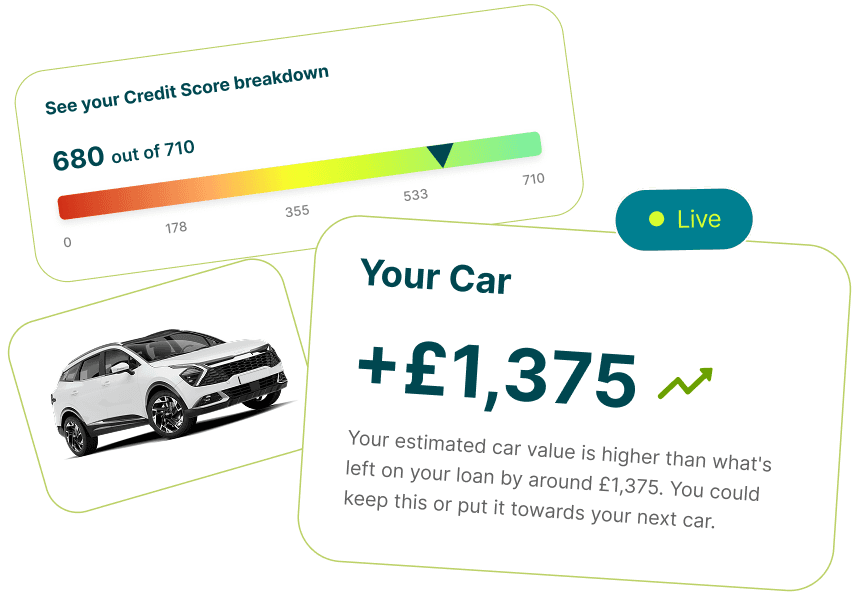
Swoppa brings your car's value, your finance position and your credit profile together in one place, so you can see whether swapping now makes sense. Check your swoppa score for free.