What Is APR And Why It Matters For Car Finance
Ever looked at a car finance agreement and seen APR? It’s one of the most important numbers in your agreement, but also the least understood.
Read more
When buying a car outright or on finance, such as PCP or HP, its value is going to change as time goes on. Most vehicles lose value as they get older. This gradual drop in value is known as car depreciation, and it's one of the key financial factors you need to consider when owning a car.
A lot of drivers focus mainly on the monthly payment that comes with their car finance agreement. While that monthly payment is clearly important, it doesn't always give you the full picture. The value of the vehicle itself also plays a crucial role, particularly if you're looking to change cars, sell your vehicle, or reach the end of a finance agreement.
Car depreciation affects how much equity you have in your vehicle. Car equity refers to the difference between what your car is actually worth and how much you still owe on finance. If the car is worth more than the outstanding balance, you've got positive equity. If you owe more than the car is worth, you've got negative equity.
Because vehicle values change over time, your equity position can also shift throughout the life of your car ownership. Understanding how depreciation works can help you get a clearer picture of your financial situation and avoid any surprises when you decide to sell or change vehicles.
If you want to get a sense of where you stand today, checking your car equity through swoppa can give you a clear idea of how your vehicle's current value compares to your remaining finance balance.
Car depreciation is the way in which a vehicle's value drops as it gets older. Every single car depreciates to some degree, although the speed and scale of that depreciation can vary depending on a whole load of different factors.
As soon as a brand new car leaves the dealership, its value starts to fall. The first few years of ownership are often when the value drops the sharpest. This is because brand new vehicles carry a premium price, and once they start appearing in used car lots, buyers are generally happy to pay less.
There are a few different things that influence how quickly a vehicle depreciates.
What happens in the wider car market can also affect how quickly a vehicle depreciates. For example, if more people start preferring electric vehicles, it could impact the resale value of petrol and diesel cars.
The fact is, a lot of vehicles lose a lot of their original value within the first five years of ownership. While that's just part and parcel of car ownership, it does have a real impact on the equity you build up in the vehicle over time.
Car equity is the difference between your vehicle's current market value and the amount you still owe on your finance agreement. This number can give you a clear idea of whether your car holds any financial value for you, or if you're still stuck owing more than it's worth.
There are two main equity positions.
Positive equity occurs when your vehicle is worth more than the outstanding balance on your finance agreement.
For example, let's say your car is worth £12,000, but you still owe £9,000. In that case, you've got £3,000 in positive equity.
Having positive equity can give you a bit more flexibility. It might mean you can sell the vehicle, put the remaining value towards another car, or even cut the cost of your next finance agreement.
Negative equity occurs when the remaining finance balance is higher than the vehicle's current market value.
For example, let's say your car is worth £10,000, but you still owe £12,000. In that situation, you've got £2,000 of negative equity.
Having negative equity is pretty common during the early stages of a car finance agreement, especially when depreciation happens faster than the finance balance reduces.
Car finance agreements reduce the amount you owe gradually through your monthly payments. However, the value of the car itself often drops faster in the early years of ownership.
This creates a situation where the finance balance remains high while the vehicle value drops quickly.
As a result, a lot of drivers find themselves in a situation with negative equity during the early stage of their agreement.
For example, during the first year of ownership:
Later in the agreement:
This shift can mean some drivers end up back in positive equity later on in the agreement.
This pattern is particularly relevant with PCP agreements, where a big chunk of the vehicle's cost may remain as a final balloon payment.
A lot of drivers only concentrate on their car's monthly payment when reviewing their finances. But your equity position gives you a clear picture of your situation.Knowing your car's value is key to understanding its real financial position and what's really going on with your vehicle
But without knowing your car's value, you can't be sure whether it's still holding its worth or whether you're stuck with a nasty financial gap between what the car's worth and what you still owe.
Using swoppa to check your car's value, you can compare your car's estimated value on the market with how much you still owe, and get a much clearer picture of where you stand.
While depreciation can be a real killer in the first few years of owning a car, it tends to start to slow down once you get a bit further down the line.
As your car moves into the used market, the value drops, but it doesn't keep dropping as fast as it was before. Sometimes, the finance bit of the deal gets paid off a lot faster than the car's value goes down.
When that happens, you might start to build up some positive equity, and that's a good thing
You might start to build up some positive equity if:
That positive equity can sometimes be used to put down a deposit on your next car.
There are loads of times when checking your car's value can be really helpful.
For example:
Do a quick equity check and you'll get a much clearer idea of whether selling your car is a viable option or whether it's worth waiting a bit longer for the finance balance to come down.
You can do it all in one go by checking your car's value through swoppa. We help estimate your car's value on the market alongside how much you still owe.
If your car has got some positive equity, you might have a bit more flexibility when it comes to what to do next.
Selling a car with some equity can give you a bit of money to play with - and that can be useful in all sorts of ways, depending on your circumstances.
You might be able to put the money towards another car, reduce your future finance commitments, or just have some extra cash to play with.
Before you start looking at selling your car, it's a good idea to get a good idea of what your car's value is, and how much you still owe. Swoppa lets you check both, and even gives you some ideas on what to do next.
While you can't avoid depreciation altogether, there are some things you can do to soften the blow.
For example:
Understanding how depreciation affects your car's value will help you make more informed decisions as you go along.
Car depreciation is just a fact of life when you're a car owner, but it's worth keeping an eye on, because it can impact how much equity you have in your car.
By keeping track of both your car's market value and how much you still owe, you can get a much clearer picture of your financial situation and make more confident decisions about what to do with your car.
If you want to understand where you stand, you can check your car's value and your equity through swoppa. Sign up now and gain clarity on your position.
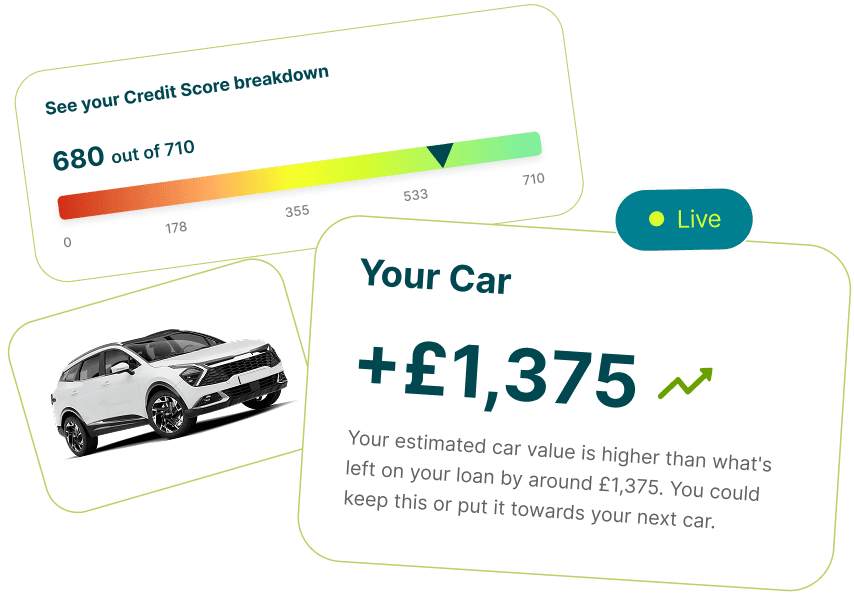
Track what your car’s worth, what you owe, and when it’s the right time to change - all in one simple score.
Ever looked at a car finance agreement and seen APR? It’s one of the most important numbers in your agreement, but also the least understood.
Read more
When you buy a car, the decision doesn’t end at the price. It shapes what options you’ll have later and how easy it is to change your car when the time feels right.
Read more
When you're choosing your next car, the monthly payment is often what grabs your attention first. It's the easiest way to figure out if you can afford it, right? But that monthly figure doesn't give you the whole picture.
Read moreEver looked at a car finance agreement and seen APR? It’s one of the most important numbers in your agreement, but also the least understood.
Read moreWhen you buy a car, the decision doesn’t end at the price. It shapes what options you’ll have later and how easy it is to change your car when the time feels right.
Read moreWhen you're choosing your next car, the monthly payment is often what grabs your attention first. It's the easiest way to figure out if you can afford it, right? But that monthly figure doesn't give you the whole picture.
Read more
TAL Marketing Group Limited trading as swoppa is registered in England and Wales under company number: 10612899. Registered Office Address: Work Life, Brown Street, Manchester, England, M2 1DH. TAL Marketing Group Limited t/a swoppa is an appointed representative of Creative Finance Corp LTD under reference FRN 968428. Creative Finance Corp LTD is authorised and regulated by the Financial Conduct Authority under reference FRN 702435, and is the principal firm of TAL Marketing Group Limited. We act as a credit broker not a lender. We work with a number of carefully selected credit providers who may be able to offer you finance for your purchase. (Written Quotation available upon request.) Whichever lender we introduce you to, we will typically receive commission from them (either a fixed fee or a fixed percentage of the amount you borrow) and this may or may not affect the total amount repayable. The lender will disclose this information before you enter into an agreement which only occurs with your express consent. The lenders we work with could pay commission at different rates and you will be notified of the amount we are paid before completion. All finance is subject to status and income. Terms and conditions apply. Applicants must be 18 years or over. We are only able to offer finance products from these providers. As we are a credit broker and have a commercial relationship with the lender, the introduction we make is not impartial, but we will make introductions in line with your needs, subject to your circumstances. TAL Marketing Group Limited t/a swoppa are registered with the Information Commissioner's Office under registration number ZB241343. Your details will be shared with 3rd parties, where it is necessary for our legitimate interests (or those of a third party) and your interests, and your fundamental rights do not override those interests, such as companies that can improve your current financial circumstances.